
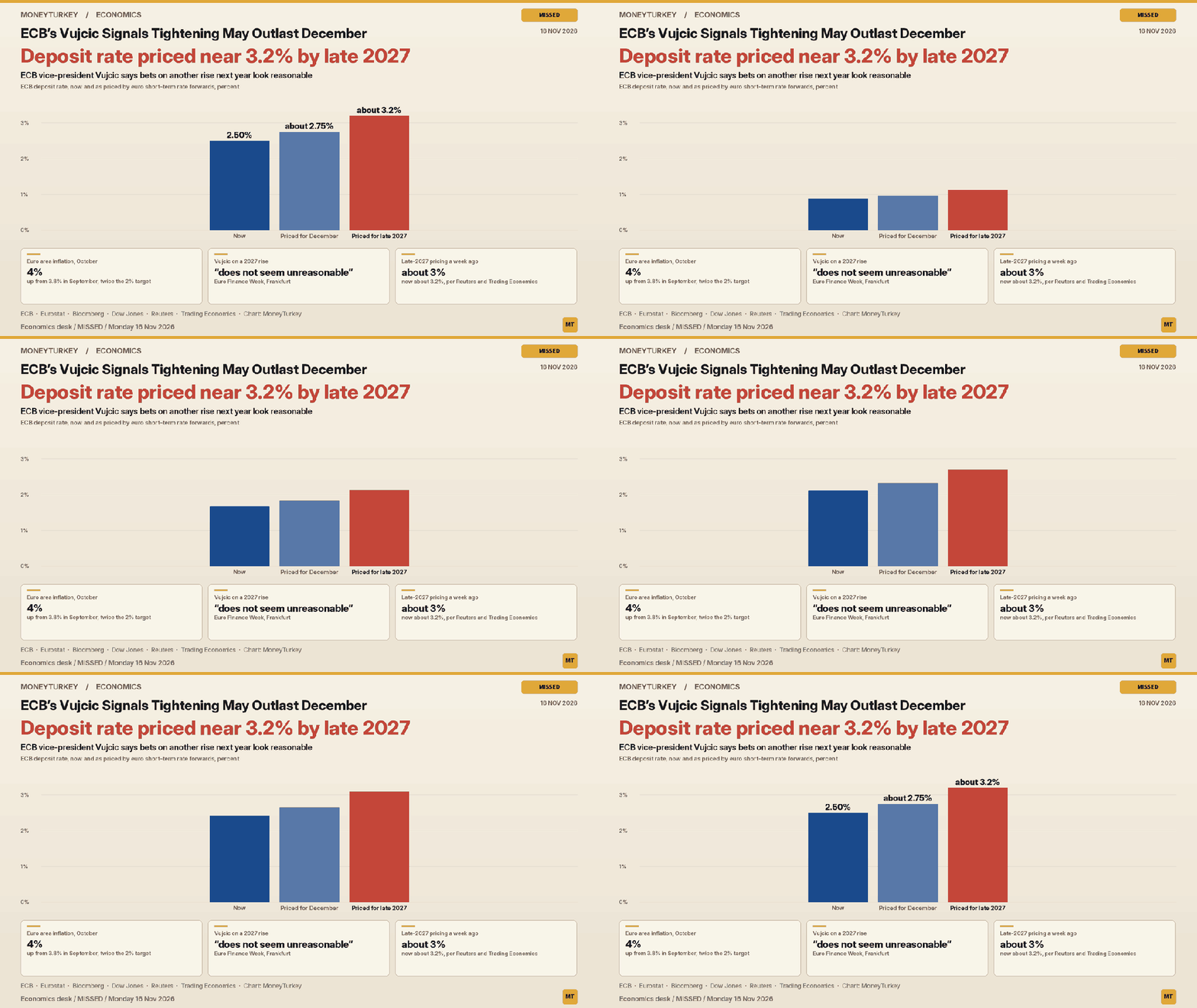
The European Central Bank’s vice-president says market bets on another rate rise in 2027 look reasonable. Markets see the deposit rate climbing from 2.50% to about 3.2% by late 2027.
MoneyTurkey Economics Desk | 16 November 2026
Key points
- ECB Vice-President Boris Vujcic said pricing of another hike next year “does not seem unreasonable”, becoming one of the first officials to look past December
- Euro area inflation rose to 4% in October from 3.8% in September, twice the ECB’s 2% target
- Money markets imply a deposit rate of about 2.75% by December and about 3.2% by late 2027, up from roughly 3% priced early last week
- Most analysts surveyed by Bloomberg still do not expect the ECB to move beyond next month
A door left open for 2027
Asked at the Euro Finance Week in Frankfurt whether the widely expected December rate rise would go ahead, Vujcic said he saw no reason to change course from a measured pace, Dow Jones reported. “Pricing of another rate hike next year does not seem unreasonable from where we stand at the moment,” he said, according to Bloomberg. “But there’s much to happen between now and then.”
The ECB has raised rates twice since the Iran war began, Bloomberg and Estadão reported. Vujcic repeated that there is no pre-set path for borrowing costs, but said the inflation outlook warrants a continued measured response.
Energy keeps inflation high
In his keynote speech, Vujcic said the conflict in the Middle East continues to push energy prices up, and that headline euro area inflation rose to 4% in October from 3.8% in September, mainly because of energy. Underlying inflation has stayed broadly stable and wages are not yet showing a material response, he said. Higher energy costs could lift inflation further, while weaker confidence and dearer financing could offset part of that by weighing on growth, Estadão reported.
He is not alone. Lithuanian central bank governor Gediminas Simkus told Econostream Media that December’s increase alone might not be enough. “Further tightening next year might be necessary, depending on the inflation outlook and strength of policy transmission,” he said, as reported by Bloomberg.
What markets price
Euro short-term rate forwards implied the deposit rate would rise to between 3.23% and 3.25% by late 2027 from the current 2.50%, up from about 3% priced last week, Reuters and Trading Economics reported. They also implied a rate of about 2.75% by December. Germany’s 10-year bond yield rose 3 basis points to 3.38% on Monday, according to Reuters, after its biggest weekly rise since mid-September as hot US inflation data spread to European debt.
Not everyone shares the hawkish view. ING strategists expect inflation pressures to ease and the ECB’s peak rate to settle near 2.5% by the end of 2027, and warn that markets may be too confident in an aggressive further three hikes.
What to watch
- The ECB’s latest Financial Stability Review, due on Wednesday, two days after Vujcic’s speech
- The ECB’s December meeting, which brings new staff forecasts
Related on MoneyTurkey
- Quick wrap: Gold at one-year low, India inflation jumps, ECB flags AI
- Quick wrap: US bonds firm before Warsh, Morgan Stanley maps European rates
- Treasury Rout Leaves Bond Buyers Bracing for More Hikes
For information only. Not investment advice.
Sources
- ECB: Risks and resilience in the euro area financial system, keynote by Boris Vujčić
- Bloomberg via The Edge Malaysia: Vujcic says bets on ECB hike in 2027 don’t seem unreasonable
- Bloomberg: Vujcic Says Bets on ECB Hike Next Year Don’t Seem Unreasonable
- Dow Jones via finanznachrichten.de: Vujcic: Erwartung eines weiteren EZB-Zinsschritts 2027 nicht unvernünftig
- Estadão via UOL: Vujcic vê como razoável aposta em alta de juros em 2027
- Reuters via MarketScreener: Euro zone yields rise as traders bet on three ECB hikes by late 2027
- Trading Economics: French bond yields rise as ECB rate hike bets grow
- ING THINK: Euro rates have good reason to be nervous

