
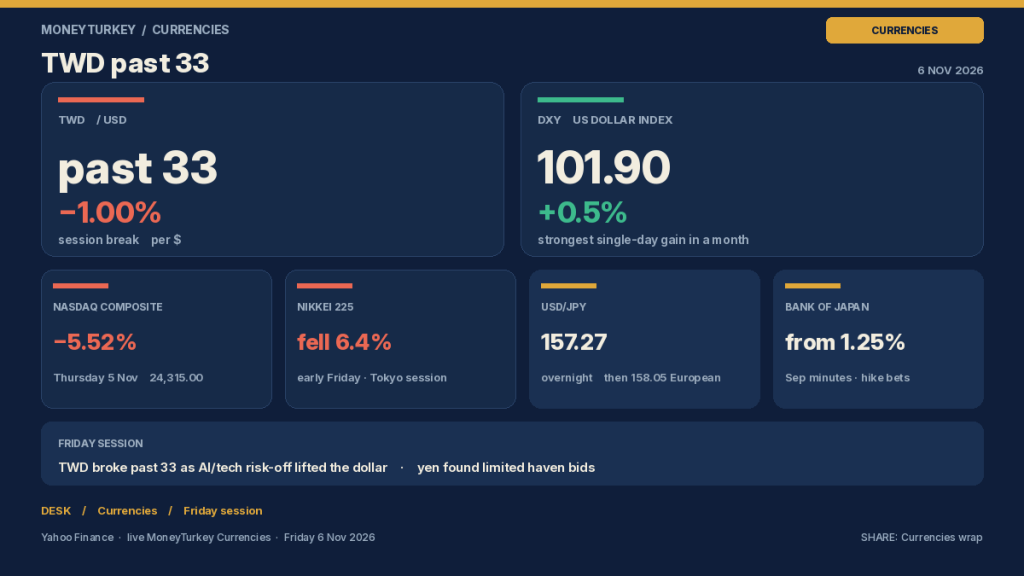
TWD breaks 33 on AI sell-off while yen gains on risk aversion.
MoneyTurkey Currencies Desk | 6 November 2026
Key points
- Taiwan dollar fell 1.00% to break 33 per US dollar amid global tech liquidation.
- US Dollar Index rose 0.5% to 101.90, its strongest single-day gain in a month.
Taiwan’s currency weakened past 33 per US dollar on Friday as a sharp sell-off in technology and artificial intelligence shares triggered a broad flight to safety. The move came as the US Dollar Index climbed 0.5% to 101.90, its strongest single-day performance in a month. Yen also drew haven bids, though the wide US-Japan rate gap capped its gains.
What happened
The Taiwan dollar fell 1.00% against the US dollar, breaking through the 33 level for the first time in the session. The move coincided with a 5.52% plunge in the Nasdaq Composite, its steepest single-day decline in 19 months. Asian FX was mixed overall, with the yen gaining on risk aversion while the Taiwan dollar led regional losses.
The US Dollar Index rose 0.5% to 101.90, recovering from earlier losses after markets priced a Democratic midterm-sweep narrative that had weighed on the greenback earlier in the week. That midterm outcome claim circulated in market commentary and is treated here as attributed market narrative, not independently verified election reporting. The greenback clawed back sharp weekly losses and finished essentially flat on the week. The euro dropped 0.4% on the day but still held a modest 0.1% weekly gain.
What is driving the currency
A violent overnight sell-off in global technology shares sparked the risk-off move. The Nasdaq Composite confirmed a technical correction after investors reacted to potential regulatory crackdowns and environmental permitting bottlenecks facing data centers. Tokyo’s Nikkei fell 6.4% in response, prompting institutional allocators to unwind high-beta positions.
The Swiss franc and yen both benefited from safe-haven rotation. The yen reached a one-week high of 157.27 per dollar in overnight trade before paring gains to 158.05 in European dealings. Hawkish Bank of Japan minutes reinforced expectations of a rate hike from 1.25%, but the wide US-Japan rate differential continued to limit speculative buying of the yen.
Why it matters
The Taiwan dollar’s break of 33 signals the scale of the AI-driven risk aversion now hitting Asian currencies. Traders are unwinding carry and high-beta exposure, pushing flows into the dollar and traditional funding currencies. The move also highlights how quickly sentiment can shift when US equity markets signal deeper concerns over regulatory and permitting risks for data centers.
For FX desks, the session showed that the dollar can still attract haven bids even after a post-vote de-risking trade. The euro’s 0.4% drop underscores how quickly a dollar-soft narrative can stall when risk appetite deteriorates. Yen traders remain caught between safe-haven demand and the stubborn US-Japan rate gap that caps upside.
What to watch
- US jobs report due next week
- Bank of Japan policy signals
- Further moves in Nasdaq and Nikkei
- Taiwan central bank response to TWD weakness
Related on MoneyTurkey
- Yen Climbs as Tech Rout and BoJ Minutes Squeeze USD/JPY Toward 157.40
- Rupee Hits Strongest Since 21 October as Oil Slide Eases Inflation Risks
For information only. Not investment advice.

