
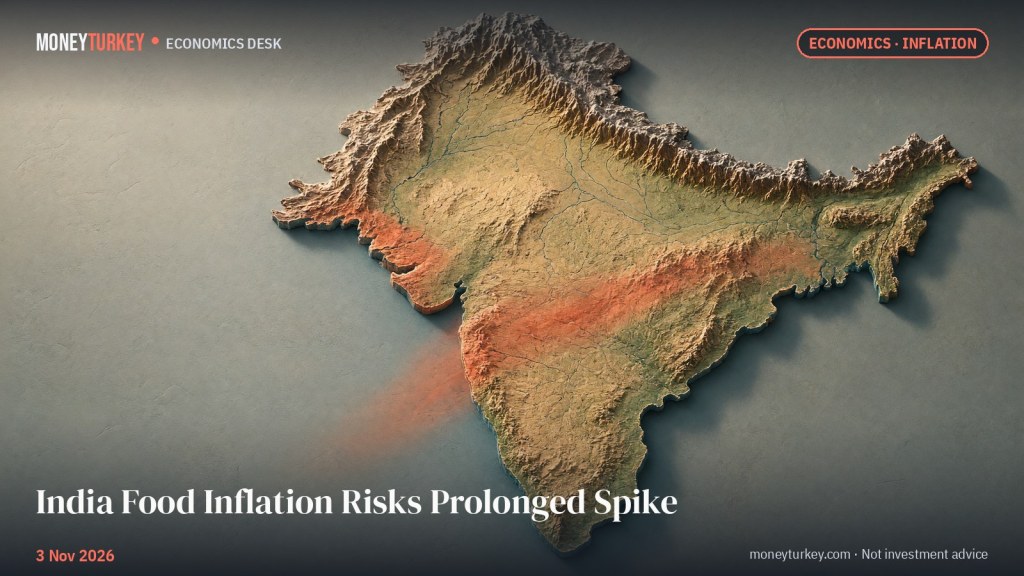
Weak monsoon, El Niño and higher feed costs push grain, chicken and milk prices higher through year-end.
MoneyTurkey Economics Desk | 3 November 2026
Key points
- India Ratings and Research forecast food inflation near 10% in the October-December quarter.
- Corn and soybean make up 60-70% of poultry production costs, adding pressure on chicken, milk and egg prices.
India faces an extended stretch of elevated food inflation as weak monsoon rains, water shortages and the El Niño weather pattern threaten winter crops. Prices of wheat, rice, pulses, onions, sugar, milk and poultry have already risen, and analysts expect further increases. The combination of higher input costs and tighter supplies could keep household food bills elevated into early next year.
What happened
Reuters and Unique Times Magazine reported that southern and western states are entering the winter cropping season with insufficient soil moisture. Farmers are struggling to plant because of the weak monsoon and the lingering effects of El Niño. Supplies of preferred grain varieties are already tight in some regions despite national stocks of rice and wheat remaining ample.
Protein prices are also climbing. Rising costs for corn and soybean feed, transport, packaging and energy are pushing up broiler chicken, milk and egg prices. India Ratings and Research said food inflation could reach around 10% in the October-December quarter.
What the numbers say
Corn and soybean account for 60-70% of poultry production costs, according to the report. Limited sugar output, higher global commodity prices, a weaker rupee and rising freight costs are adding to the pressure on sugar and imported inputs. Economists note that these factors compound the effect of lower domestic harvests.
India Ratings and Research projects the 10% food-inflation reading for the final quarter of the year. The agency links the forecast to both crop shortfalls and the continued rise in protein prices from January onward as feed costs stay high and supplies tighten.
Why it matters
Prolonged food-price gains can weigh on household spending, especially for lower-income families who allocate a large share of their budgets to food. Economists warn that sustained protein inflation may force households to cut consumption of nutritious items such as milk, eggs and chicken.
Reuters noted that continued food inflation could also increase pressure on the Reserve Bank of India to raise interest rates. Higher borrowing costs would aim to curb broader price pressures but could slow growth if households reduce discretionary spending.
Policy and market response
The outlook for food prices now hinges on winter crop production and the weather over the next two months. A poor winter harvest would extend supply constraints into 2025, while a normal season could ease some pressure on grain and vegetable prices.
Reuters also reported that the government eased foreign-exchange reporting rules for small-value service exports and imports, a separate measure aimed at reducing friction for smaller firms but not directly tied to the food-price outlook.
What to watch
- Winter crop output data due in January
- Monthly food inflation prints through December
- RBI policy minutes for rate hints
- Global corn and soybean price moves
Related on MoneyTurkey
- Turkey Inflation Quickens Unexpectedly, Clouding Rate Path
- BOJ Signals Inflation Target Now Anchored
For information only. Not investment advice.
Sources
- Unique Times Magazine: https://uniquetimes.org/india-faces-prolonged-food-inflation-as-prices-of-grains-chicken-and-milk-rise/
- Reuters: https://www.reuters.com/world/india/grains-chicken-milk-india-faces-prolonged-food-inflation-2026-11-03/
- Reuters: https://www.reuters.com/world/india/india-eases-forex-reporting-rules-small-value-service-exports-imports-2026-11-03/
- Economic Times: https://economictimes.indiatimes.com/news/short-videos/india-to-become-worlds-largest-economy-china-must-not-fear-india-jeffrey-sachs/videoshow/135481340.cms
- Economic Times: https://economictimes.indiatimes.com/news/videos/india-to-become-worlds-largest-economy-china-must-not-fear-india-jeffrey-sachs/videoshow/135481342.cms

