
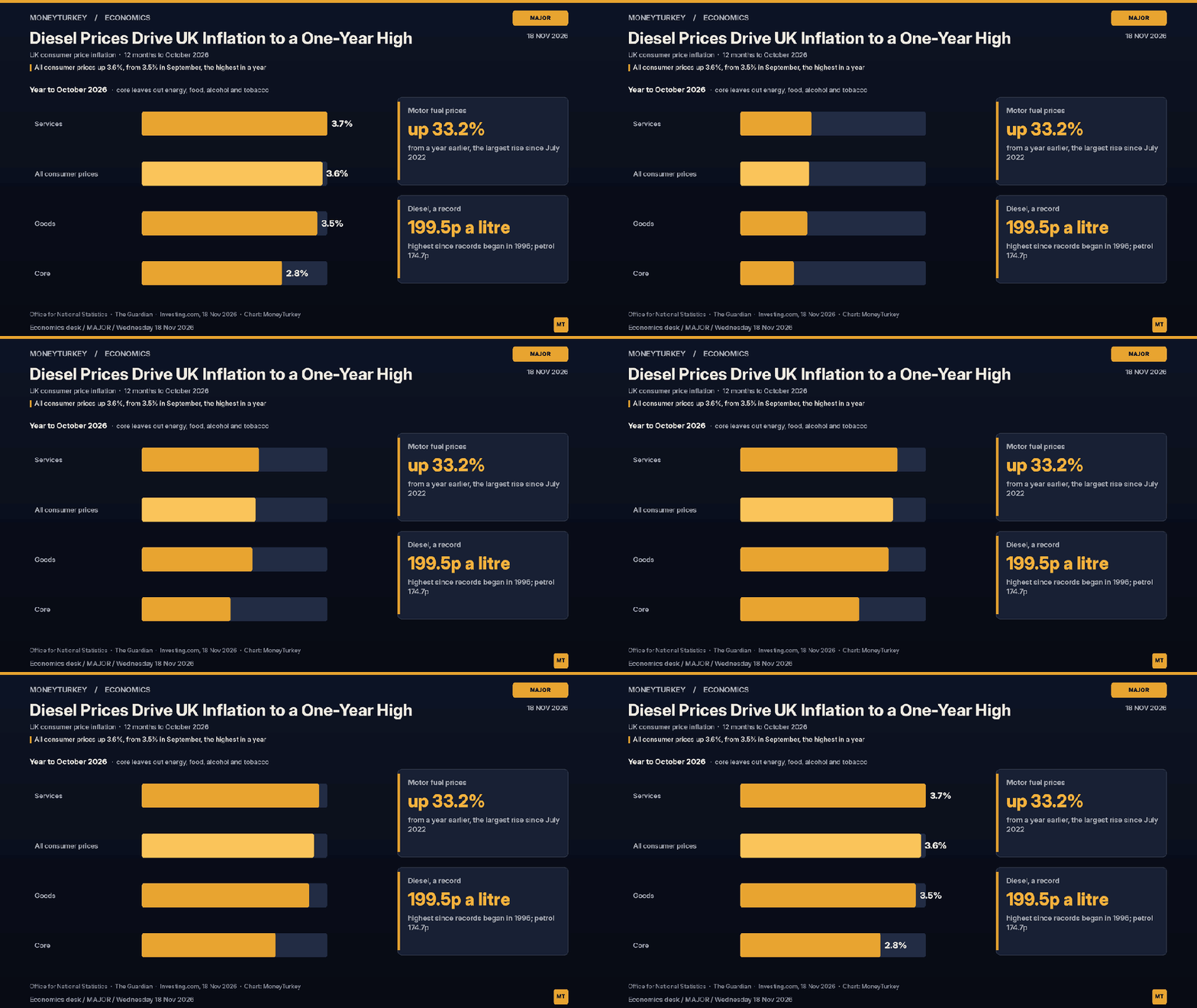
Britain’s drivers felt it first. Diesel climbed to the highest price on record in October and lifted UK inflation to its fastest pace in a year, but the numbers underneath were calmer than the City feared, and the bigger squeeze on households is still to come in January.
MoneyTurkey Economics Desk | 18 November 2026
Key points
- Consumer prices rose 3.6% in the year to October, up from 3.5% in September and the highest in a year, in line with forecasts
- Motor fuel prices were up 33.2% on a year earlier, the largest rise since July 2022
- Core inflation held at 2.8% and services inflation at 3.7%, below the 3.8% economists expected
- Cornwall Insight forecasts a 26% jump in the energy price cap in January, to £2,166 a year for a typical household
What happened
The average price of diesel rose 7p a litre between September and October to 199.5p, the highest since records began in 1996. Petrol rose 5.2p a litre to 174.7p, the highest since August 2022.
“Inflation rose slightly in October, with fuel prices once again a major contributor to the increase in the annual rate,” Grant Fitzner, the ONS chief economist, said. Higher tobacco duty, which came earlier this year than last, also pushed the rate up.
Prices of goods rose 3.5% on the year, up from 3.2% in September. Food and soft drink prices rose just 0.9%, the smallest increase since September 2021.
Why the Bank of England can breathe a little
The Bank raised interest rates earlier this month, its first increase in more than three years, and warned that borrowing costs may have to rise again to contain the energy shock from the Iran war. It expects inflation to peak close to 5% next year.
October’s steady core and services readings eased some of that pressure. Investors trimmed their bets on a rate rise in December and sterling slipped slightly against the dollar. “Today’s slightly softer headline inflation data make a December interest rate hike less likely, but it does little to change the broader outlook,” David Rees, chief economist at Schroders, told Reuters.
The bill still coming
The harder month for households is January. Cornwall Insight forecasts that the energy price cap will rise by £443 to £2,166 a year for a typical household, its highest since 2023. The government will pay £100 to about 20 million households in January to help with bills. Ofgem sets the new cap on 25 November.
What to watch
- Ofgem’s January price cap decision on 25 November
- Whether the Bank of England raises rates again in December
- Signs that energy costs are spreading into wages and other prices
Related on MoneyTurkey
- Pound Halts a Five-Day Slide as UK Payrolls Fall
- UK Vacancies Sink to 2014 Low as Pay Growth Cools
- T. Rowe Stays Short Treasuries and Leans Into UK Gilts
For information only. Not investment advice.
References
- Office for National Statistics: Consumer price inflation, UK: October 2026
- The Guardian: UK inflation rises to 3.6% after petrol and diesel prices hit record high; Energy bills in Great Britain forecast to rise by 26% to £2,166 from January
- Reuters (via via Investing.com, via MarketScreener): UK inflation rises to one-year high but markets trim rate hike bets; Britain’s energy price cap to rise 26% in January, Cornwall Insight predicts
- Anadolu Agency: UK inflation rises to 3.6% in October, highest in year
- The Independent: Winter energy bill misery on way as price cap set to jump by 26% in January

