
Stalled port negotiations in California add a logistics threat to a US cattle market already weighed down by heavy supply and soft beef exports.
MoneyTurkey Commodities Desk | 5 November 2026, 13:55 London
Key points
- CME feeder cattle futures fell $2.50–$3.125 per hundredweight and live cattle lost 15–85 cents on Wednesday, 4 November.
- There was still no word on the California port negotiations by Wednesday night, DTN reported.
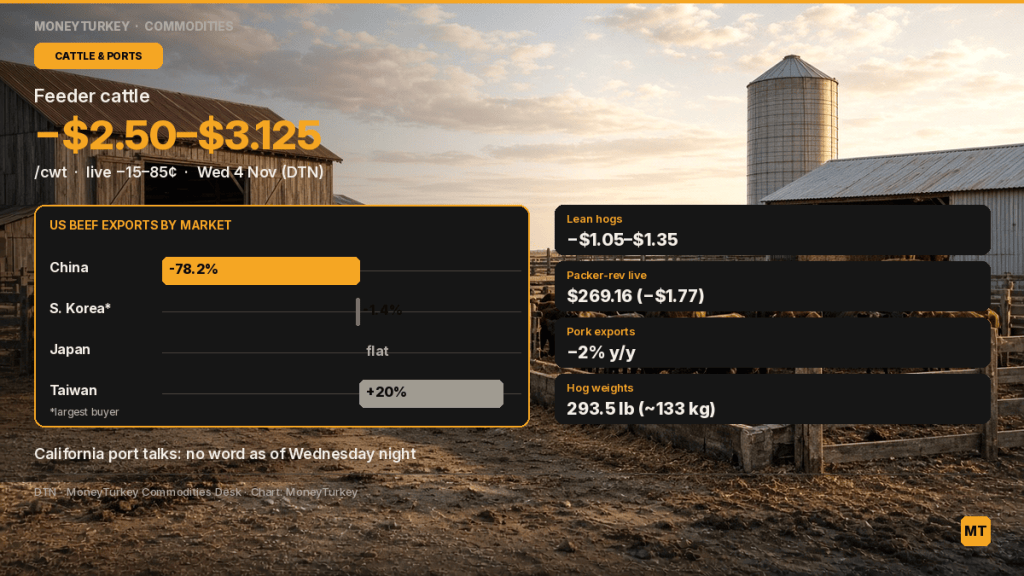
- Beef exports to China fell 78.2%, South Korea (currently the biggest buyer) slipped 1.4% and Japan was flat; Taiwan rose 20%.
- Lean hog futures fell $1.05–$1.35; pork exports were down 2% year on year.
US cattle futures resumed their slide on Wednesday as uncertainty over negotiations at California ports weighed on prices. Feeder cattle fell another $2.50–$3.125 per hundredweight and live cattle lost 15–85 cents, according to DTN. The port stand-off lands on top of a week of weak export data and ample slaughter-ready supply.
What happened
Futures attracted some buying in morning trade but lost footing by midday. As of Wednesday night there was still no word on how the California port talks were progressing. Cash cattle continued to trade lower, with packers appearing to hold the upper hand.
Producers in Iowa described struggling to find buyers over the past 30 days. Cattle are staying on feed longer and adding weight while they wait, leaving the market flush with animals ready for slaughter.
DTN’s packer-revenue equivalents were lower too: the live cattle equivalent stood at $269.16, down $1.77, and the lean hog equivalent at $76.06, down $3.14.
What is driving prices
Export data released Wednesday showed broad weakness in beef. Shipments to China fell 78.2%, South Korea, currently the largest buyer, slipped 1.4%, and Japan was flat. Taiwan was the one bright spot, up 20%.
Lean hog futures also fell, down $1.05–$1.35. Hog weights last week averaged 293.5 pounds (about 133 kg), up 0.8 pounds on the week and 1.9 pounds on the year. Pork and pork product exports were down 2% year on year: Mexico, the largest buyer, fell 6%, China and South Korea were each down 7%, and Japan rose 7%.
Why it matters
West Coast terminals are the main gateway for US beef and pork headed to Asia, so any prolonged disruption hits the same buyers already pulling back. With packers setting terms and heavier cattle backing up on feed, the port outcome is now a direct near-term driver for the livestock complex.
The China figure stands out: a 78.2% drop leaves US beef increasingly dependent on South Korea, Japan and Taiwan, a concentration that matters for traders watching US–Asia trade flows after the midterms.
What to watch
- Outcome of the California port negotiations
- Weekly export data for signs of a recovery in Asian demand
- Slaughter pace and any shift in packer bids
- Hog weights and pork export trends
Related on MoneyTurkey
- China Diesel Exports Set to Drop on Thin Stocks
- Gold Rallies as Dollar and Yields Soften After US Midterms
For information only. Not investment advice.
Sources
- DTN (Robin Schmahl, DTN Contributing Analyst): Uncertainty at West Coast Ports Pressures Cattle Markets

