
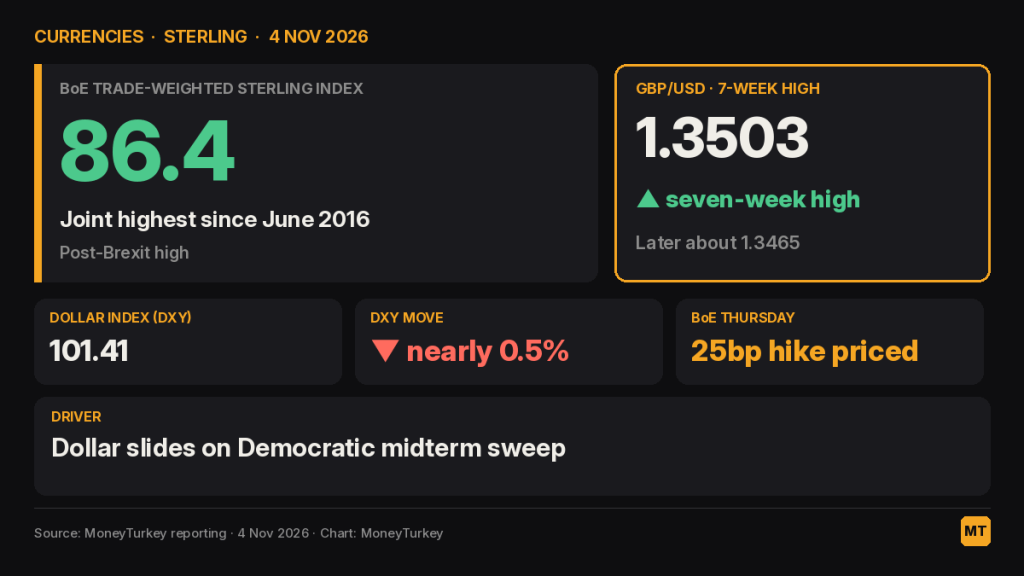
Sterling has climbed to its highest overall level since the 2016 Brexit referendum, according to Bank of England figures, as the dollar slid on the Democratic midterm sweep and traders braced for the Bank’s first rate rise in three years on Thursday.
MoneyTurkey Currencies Desk | 4 November 2026
Key points
- The Bank of England’s trade-weighted sterling index, which tracks the pound against 18 major currencies, reached 86.4 this week, its joint highest since June 2016, the BBC reported. The Bank will confirm the figure on Thursday.
- GBP/USD touched a seven-week high of 1.3503 on Wednesday before easing to about 1.3465, according to FXStreet. The dollar index fell nearly 0.5% to 101.41.
- A quarter-point Bank of England hike is all but fully priced for Thursday, and swaps imply about 75 basis points more tightening over the next year or so, Scotiabank strategists said.
What happened
The dollar weakened after US midterm results showed Democrats on course to win both the House and the Senate. Treasury yields eased and US stocks rose, with some analysts noting that markets have tended to do better when no single party can push legislation through on a party-line majority, FXStreet reported.
US data added to the dollar’s softness. The ISM services index for October came in at 54.5, below forecasts of 54.8, although ADP private payrolls rose by 86,000, ahead of the 69,000 expected. Sterling also gained against the yen this week. In the UK, final October services and composite PMIs were revised slightly lower to 52.8 and 52.9, with little effect on the currency.
Why the pound is strong
The bigger story is the trade-weighted index, not cable. Sterling fell sharply after the 2016 vote and hit further lows during the Brexit process, the pandemic and the 2022 mini-Budget. Now some traders see the UK in a different light because of relative political stability, solid growth and closer ties with the European Union, the BBC reported. Former Treasury minister Jim O’Neill said people were underestimating the UK’s improving momentum.
Rate expectations do the rest. With the dollar on the back foot, the Bank of England is expected to start tightening, which widens the gap in sterling’s favour. Signs that higher energy and fuel prices are denting UK consumer confidence are the main risk to that story.
Why it matters
A stronger pound helps rein in imported inflation and raises buying power on imports and holidays, but it squeezes UK exporters’ overseas earnings when converted back. For the rest of the FX map, a softer dollar after the midterms eases pressure on emerging-market currencies that sold off earlier in the autumn, such as Poland’s zloty.
Scotiabank said a daily close above the 200-day moving average at 1.3425 would be constructive for the pound, and a close above 1.3470, the 61.8% retracement of the August–October slide, more so. It sees the recovery from the mid-October low targeting the upper 1.36 area in the coming weeks.
What to watch
- Bank of England rate decision and confirmation of the trade-weighted index, Thursday
- US initial jobless claims and Fed speakers, Thursday
- US non-farm payrolls, Friday (about 65,000 jobs expected)
Related on MoneyTurkey
- Poland Holds Rates at 3.75% for Eighth Month After Zloty Hits Three-Year Low
- ECB’s Nagel Signals December Rate Hike
For information only. Not investment advice.
Sources
- BBC (Nov. 4, 2026): Pound rises to its highest level since the Brexit referendum
- FXStreet (Nov. 4, 2026): British Pound nears seven-week high as US elections weaken USD, BoE looms
- FXStreet / Scotiabank (Nov. 4, 2026): British Pound: Recovery targets upper 1.36 area against US Dollar

