
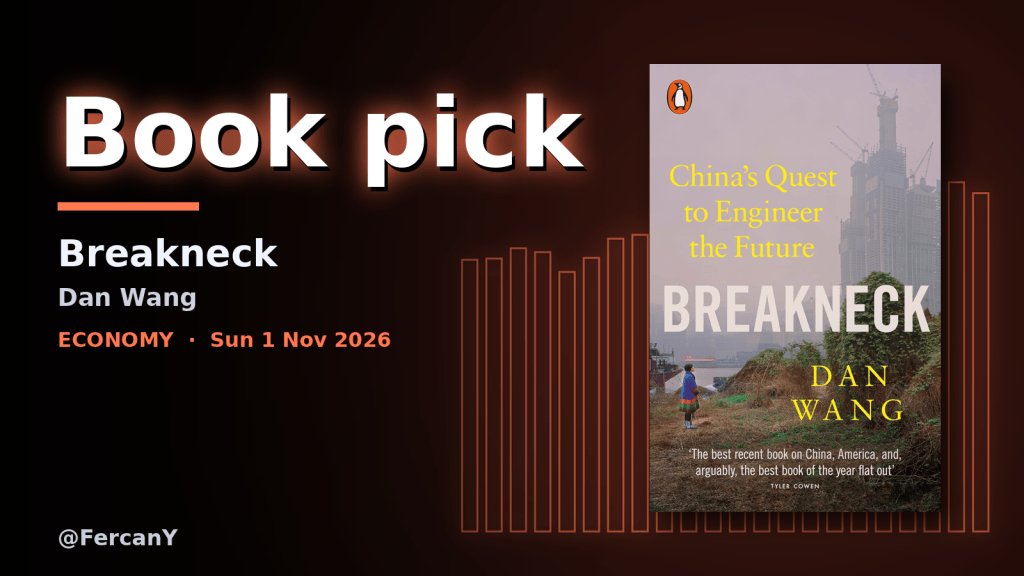
A clear-eyed look at how China builds and the United States regulates, with implications for anyone watching supply chains and trade policy.
MoneyTurkey Books Desk | 1 November 2026
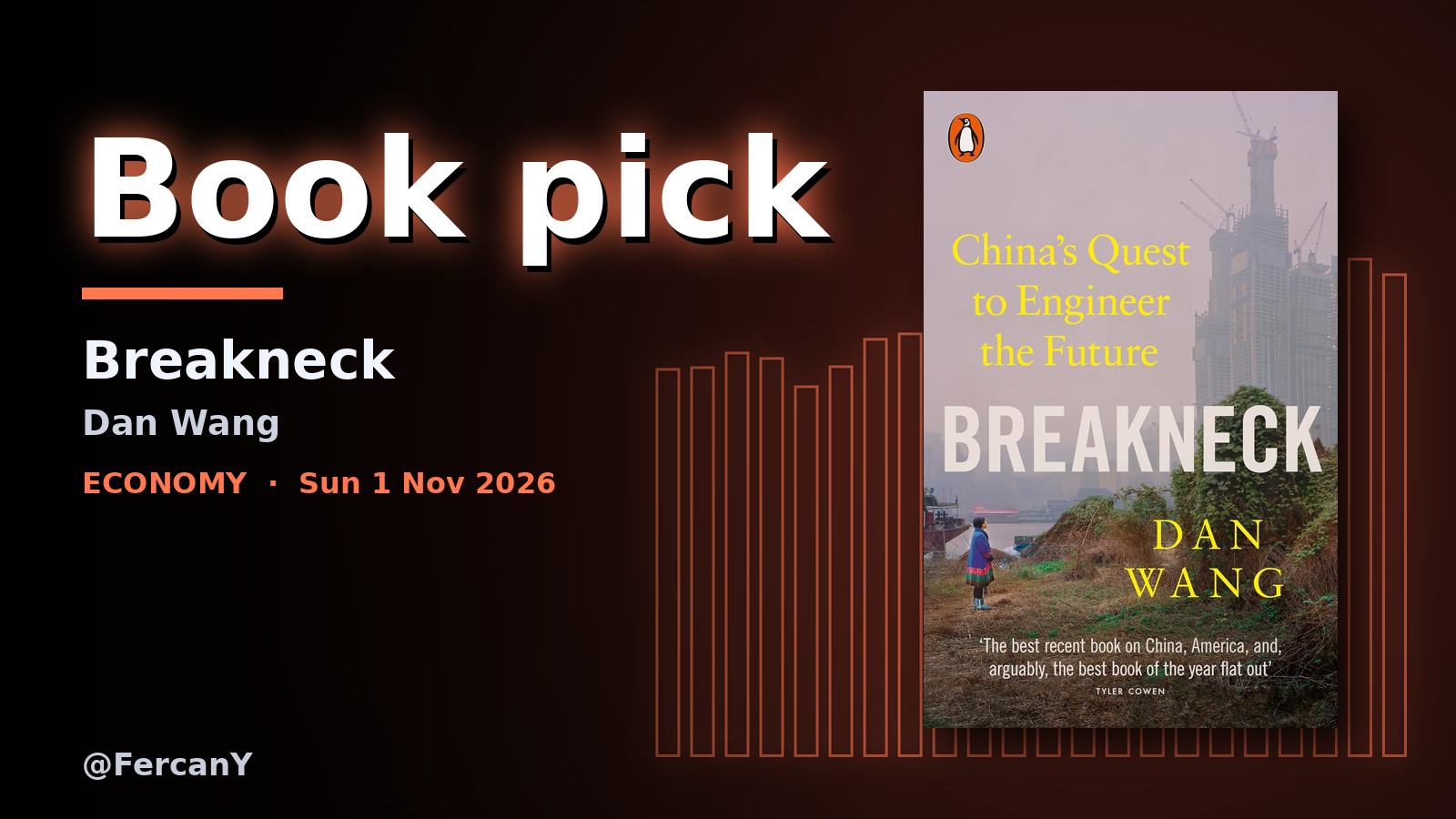
Breakneck: China's Quest to Engineer the Future — Dan Wang (2025) · See it on Amazon UK
Key points
- The book frames China as an engineering state that prioritises rapid construction and the United States as a lawyerly society that favours process and litigation.
- This contrast helps explain current frictions over tariffs, technology controls and the geography of manufacturing.
Dan Wang’s Breakneck examines why one country erects bridges and factories at pace while the other debates them for years. The author traces this divergence to differing institutional priorities rather than simple policy choices. Readers come away with a framework for thinking about the next phase of economic competition between the two powers.
What the book argues
Wang presents China as an engineering state whose officials treat large-scale projects as the default solution to economic and social problems. The state’s ability to mobilise capital, labour and land allows it to complete infrastructure and industrial capacity quickly. This approach delivers visible results in transport, energy and manufacturing.
By contrast, the United States operates as a lawyerly society in which courts, regulators and interest groups can slow or halt projects. The author does not treat either model as purely superior; each carries costs in accountability, environmental standards and individual rights. The book’s central claim is that these institutional habits shape the two economies more than ideology alone.
Why it matters now
Tariff negotiations and export controls are easier to interpret once the differing speeds of decision-making are taken into account. Supply-chain managers already see the effects when new Chinese factories come online faster than comparable facilities elsewhere. Investors monitoring reshoring incentives may find the same contrast useful when weighing timelines.
The analysis also touches on demographic and environmental pressures that could alter China’s construction-led model. Observers of both countries will recognise familiar trade-offs between speed and scrutiny without the book prescribing which balance is optimal.
Who should read it
The book is written for readers who follow trade policy, industrial strategy or the physical footprint of globalisation. It assumes only a general interest in how states allocate resources rather than specialist technical knowledge. Those working in logistics, procurement or regulatory affairs may find the institutional comparison particularly relevant.
Wang keeps the discussion grounded in observable outcomes such as completed rail lines and permitting disputes rather than abstract theory. The result is a concise reference for anyone updating their mental model of the US-China economic relationship.
As an Amazon Associate MoneyTurkey earns from qualifying purchases. Amazon Associate purchasing terms apply. Not investment advice.

